Over the course of the past academic year, my skills have improved greatly with both Photoshop and InDesign, and I feel this has been proven when you compare my finished music magazine to its preliminary task. Before beginning in September I had very little experience in either program, yet now I am comfortable with using the two and am able to operate them in ways I previously never expected possible. The preliminary allowed me to grasp the entire concept of creating a real media product through practice, and then I could learn from any mistakes made and later apply this to my main task for the better.
When reflecting back at both finished magazines, there is a noticeable difference and an evident leap in quality in the second. Although at the time I was pleased with what my preliminary evolved into to, I had struggled and am now able to spot many ways in which I could enhance the overall creation. The layout looks far too bare due to a lack of headlines, and these are vital in order to convey a relaistic magazine and attract the buyers wanted. A house style may appear present, but I believe that too wide a range of colours are used which may suggest inconsistency so would change this if I were to ever re-do the project. I also had a better understanding of each programs tools the second time around, so with these abilities I was able to manipulate images and help them look more attractive and captivating to the reader. Perhaps it may be unfair to compare Dare's contents page to its predecessor, because the preliminary's was only meant as a draft, however I do believe it is missing many typical conventions of any magazine, by an extortionate measure. I also learnt how to manage my time a little more carefully, as in the first task I had jumped head first into creating the magazine, without making any plans of design or much research. In the following main task I made certain to analyse existing media products further within the same magazine market beforehand, and these helped for inspiration, conjuring many potential ideas for my own structure and layout. I realised that research was essential in order to convey a genuine, real music magazine, otherwise I would have little knowledge of the usual conventions included.
 item of software I was introduced to was Adobe Photoshop CS4, and this played a crucial part in the entire creation of my magazine. I had limited experience in a similar programme, called GIMP (GNU Image Manipulation Programme), so this may be considered as a "head start", and quite beneficial for me. However, Photoshop is fairly more advanced therefore it took longer than expected to adjust to the changes between the two.
 ed quite dull and shady - which would not attract many readers. However, this fast and simple tool allowed me to brighten up the colours and create a more professional, asethetically pleasing look to them.
 This procedure is used for the pictures used in almost every magazine around today, even outside of the selection of music magaines I've studied. There are quite a few different tools available on Photoshop that allow you to effortlessly remove any spots or marks you wish to hide. I found myself using the Spot Healing Brush quite often, as it appeared to be the most effective at covering up all unwanted lumps and bumps. I also used the Smudge Tool, to help smoothen out the skin and help provide a more natural look. With the use of the Paintbrush, I am also able to add make-up onto Leanna's face to enhance her indie-styled look.
Here is the original and finished result, once completed the above steps. There is evidently a vast imporvement in quality between the two images, the second having softer skin and a bold burst of colour, making it much more likely to catch people's eye.
* Adding Shadows
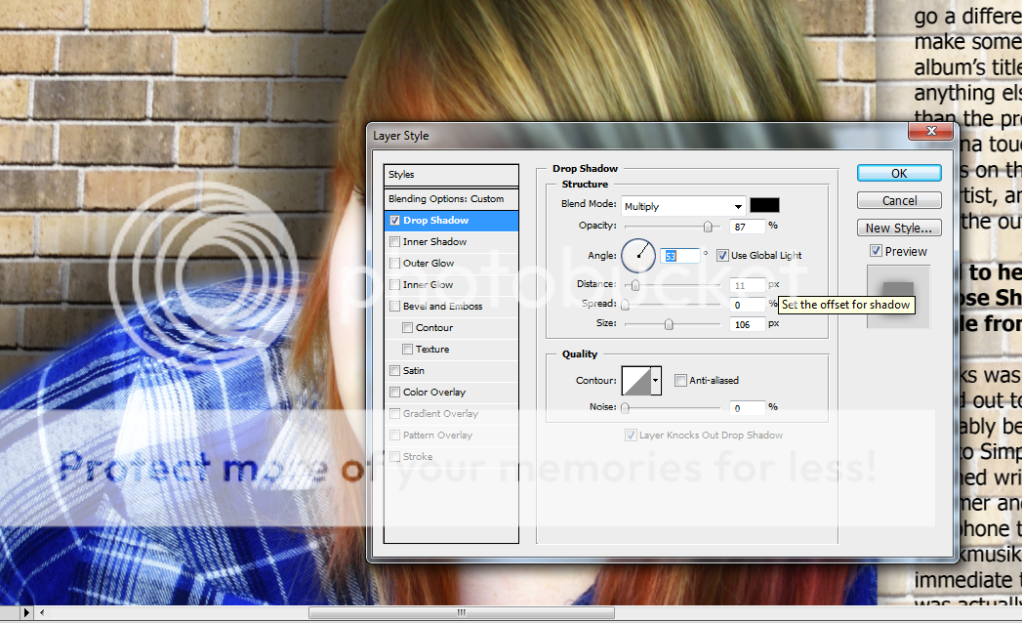
There are also plenty of other essential things I have learnt on Photoshop, throughout my progression of using the software. These include:
* Using the magnetic lasso tool and magic wand to remove backgrounds
* Cropping in order to select a particular part of a picture
* Creating text layers, adjusting their layout and how to text wrap
* Downloading various fonts and brushes for use within my magazine
* Adding various filters to alter an image and add appealing effects
* How opacities work, and how to change the levels of transparency
Although perhaps not as vital to the course as the previous, there were many other technologies used that assisted me in the design of my magazine:
 the obvious pulls of attraction would be the artist themselves. On the front of almost every magazine of this type, the band or singers name would be printed on the cover in large, bold text - often greater in size than the actual magazine masthead or other embodied features, so they appear prominent. This would make it the centre of attention, proving their importance. Most magazine brands of this sort use music stars on their covers that would be instantly recognised by their target audience, and are likely to have a large following, therefore by flaunting the artists title, it will increase peoples chances of noticing the magazine and consequently making a purchase. I felt it was only evident th
 at I should do the same, assuming Leanna is a familiar artist within the specified genre, as this would attract interest from the many who are a supporter of her and at the same time satisfy the magazine's loyal audience.
 ent used to attract my target audience was the inclusion of a pull quote, extracted from the inner interview with Leanna. The pull quote is used as a bait to its audience, as it lures people in and further extends their interest in reading the magazine. It is essential to choose an effective quote from the artist in order to create this desired impact, as something too minute or insignificant would not excite the potential buyer into wanting to learn more. To serve its purpose, it must be able to schock and entice the reader, so the most controversial statement spoken within th interview is often used, as shown above with the phrase "Kiss my ass!" I believed it would improve sales of my magazine by the addition of a pull quote, stating "Now I can do it my way", in a bold red that leaps out from the page. This portrays a rebellious attitude, and with the word 'evolution' also
  used among the heading, it suggests she has taken a change in direction, whilst unleashing a new sense of independence. As Leanna is supposedly a famous and global star within the music world, this should allure more people into purchasing the magazine, as they would be curious of Leanna's story and temptation will prevail.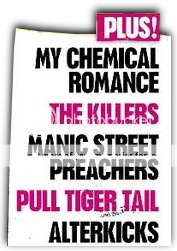
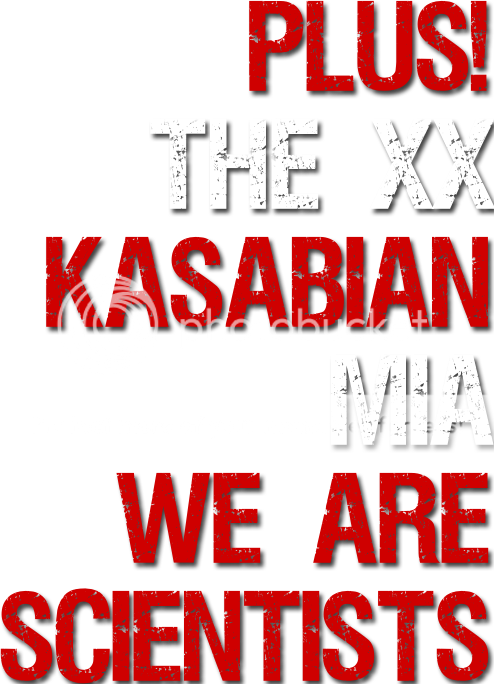 music industry, and would attract immediate attention from all that take notice of the genre. An even further list of artists were included within a "Band Index", printed on the contents page. They were each ordered alphabetically, so again, people are able to easily locate the musicians they enjoy and make a purchase if necessary.
To maintain a steady amount of readers, I decided to include a special offer on the contents page to those who pay weekly subscriptions of Dare, as it is also necessary to consider the future of the magazine. This should especially appeal to the already loyal followers of a magazine, as it would save them 75p with each issue. However, it may also convince others to become regular readers themselves. Many people within my target group, between the age bracket of approximately 16 and 22, are likely to struggle to afford purchasing every issue at its usual price. This is because they are often still students within education, and perhaps without an occupation - so therefore would have very little income of their own, if at all. This reduction in price would induce its potential buyer and prompt many into paying for the subscription.
UPS: Unique Selling Point
In order to distinguish my music magazine from any other and help it stand out from the crowd, a UPS is important. Dare shares similar music tastes to those included in NME, so I must ensure that I include something that would undoubtedly seperate the two. NME tends to focus on festivals, gigs and the live aspect of music, whereas my magazine will be essential for all the latest news and freshest releases. By issuing Dare every week, it would not give enough time for the news to become "out of date", therefore offering exclusivity to the buyer.
Male: 73%
Target Market: Men 17-30
Median Age: 25
My Audiences Taste In Music? Indie/alternative/electronica, artists that are often not too well known within the mainstream and could be considered unique and versatile, rather than generic and commercial - eg. MGMT, Delphic, Florence & The Machine, Mumford & Sons, The XX. Each of these were mentioned on my contents page which should assist in attracting these people.
Their Clothing? Often very casual, or supposedly "cool and trendy" - vintage, preppy, retro, mix & match; shopping at places like Topman/shop and Hollister. Plaid shirts, floral patterns & skinny jeans etc would be worn, and this style of fashion runs through my magazine, shown by the clothing worn in its cover feature, Leanna.
Their Favourite TV Programmes? Music channels such as VIVA and 4Music, teen dramas including Skins and The Inbetweeners, comedies, reality shows or documentaries - as I view my target audience as quite artistic, intelligent and well educated, therefore finding interest in learning about new things or experiences.
Their Main Interests & Hobbies? Attending gigs and festivals, socialising with friends (and parties), shopping, travelling, writing and reading - quite music orientated.
Socio-Economic Groups
It believed it was important to research the different socio-economic groups before producing my magazine, so that I was able to categorise my own target audience. I found the following information on a site called Market Research World:
"Market Research agencies often divide the population into different groupings, based on the occupation of the head of the household, for the purpose of drawing comparisons across a wide range of people - it is used to see how people in differing socio-economic situations react to the same stimuli. The groups are most often defined as follows:-
A- Higher managerial, administrative, professional e.g. Chief executive, senior civil servant, surgeon
B - Intermediate managerial, administrative, professional e.g. bank manager, teacher
C1- Supervisory, clerical, junior managerial e.g. shop floor supervisor, bank clerk, sales personC2 - Skilled manual workers e.g. electrician, carpenter
D- Semi-skilled and unskilled manual workers e.g. assembly line worker, refuse collector, messenger
E - Casual labourers, pensioners, unemployed e.g. pensioners without private pensions and anyone living on basic benefits"
 not fit into any of the various categories. To the left is a spider diagram I located at UKTribes.com, and its represents the different social groupings currently in Britain. My magazinne has a clear niche audience, and is aimed at people with a liking towards indie music, so I should focus my attention more to the groupings within the Alterntative category. Nevertheless, I still believe this is too vast a classification, and the arrangement is not specific enough, as I doubt goths would find much enthusiasm when reading my magazine - as they have their own specialised tastes in music as well and would most probably disapprove of the leading genre in Dare.


I have concluded that Dare will be distributed weekly by Bauer Media. NME and Kerrang! are two already popular music magazines that are published every week, and they share a similar price to my own, so I believed it would be suitable to do the same because £2.20 is far too cheap for the cost of a monthly magazine when compared to the others. I also intended mine to be very current and up-to-date, so that my readers are able to keep informed of all the latest news within the indie scene, so it is necessary for the magazine to be published every week, in order to be conisdered valid and reward a sense of exclusivity to the buyer. I believed Bauer would be the most appropriate choice of publisher for my magazine because there is currently no other sold by them that is of the same genre, and a lot of promise is shown after observing their circulation figures. I decided that IPC Media would be unsuitable for the distribution of my magazine, as it is too alike their own weekly music publishing, NME. This would cause serious competition between the two and a likely risk of both our sales decreasing, so this situation should be best avoided.

Within the magazine market, I would say that Dare is most alike NME, it being my main source of inspiration when producing the publication. NME may be conisdered to have a niche audience - a very specific segment of readers, and this is likely to be the case for my own due to the similarities in music genre. I believed it was vital to use somebody on the cover who is within the same age range of my targeted audience, as it would allow more people to understand and relate to the artist, therefore I deemed Leanna apropriate for the role. I thought I would compare my own cover image with another picture taken from an older copy of NME, in an article about Lily Allen. It is evident that there are multiple similarities between each photo, such as pose, costume and camera angle, which is vital if I want to convey a realistic media product.
The first thing that may be most noticeable is the matching in clothing between the two artists. Both are wearing loose-fitted plaid shirts, although different coloured, and are dressed in a casual manner. They have an untidy look to their appearance, with their hairstyles also purposely styled in a rugged, scruffy way, which well portrays the traditional indie, cool and contemporary kind of style, and is commonly worn by the youth of today. If I were to dress Leanna up more elegantly or seductively, this would detract from the artist herself and portray her as the opposite to what she supports. Leanna prefers to be renowned for her music rather than fashion or lifestyle, so wears what she feels comfortable in rather than what may be viewed as "more attractive".
Lily and Leanna are also posing very similarly. Both are leaning forward with their head raised so they are staring directly at the camera, although Lily's is tilted more to her right. Leanna's photo was taken as a high angle shot, whereas Lily's is almost directly at eye level. This could be conveyed either way, with a suggestion of dominance or superiority to the character, or perhaps even vulnerability. Direct eye contact with the reader provides a sense of intrigue and provokes its audience into wanting to learn more of the artist, consequently buying the magazine issue. Leanna's eyes are also slightly squinted, as though she is "giving evils", and her glare suggests she can be ruthless and has a hardened edge to her charcter. Their mysterious, perplexed facial expressions may also suggest they hold a secret, one that would be revealed throughout the article - again, convincing people into purchasing the magazine. Their posture also symbolises confidence within themselves, as their hands are placed on their hips and this could often suggest that they are courageous and determined in what they do. Their poses may also convey a daring attitude, which would undoubtedly support my choice in title and merge well with my entire idea for the magazine. This, along with the sensibility shown in the interview itself, could portray the specified social group in a positive light as it suggests dedication from Leanna, and faith in being herself, which may encourage young people to change their behaviour and show their individuality - or the older to change their opinions of typical stereotypes.